My slide deck philosophy.
One idea at a time.
Not noise.
Not content volume.
Not “thought leadership” by the pound.
One clear idea.
Sharpened.
Repeated.
Made visible.
That is how perception changes.
My minimalist presentation philosophy:
Simple says more.
I know this should be obvious, but actually it is far harder to create a simple message than a complicated one.
When you’re designing a slide, you need to think that it’s going to be on a glowing screen blown up big in a really dark room. (People forget that this deck is not on their monitor!)
You frequently have no control that environment. You literally don’t know what the presentation environment will be like until you show up and open your laptop and realize that what you created isn’t going to work in that room for example maybe if you’re lucky it’s a monitor behind you but then nobody can see you because you’ll be dark and the slide will be bright. Maybe there are tons of lights behind you on a stage competing for attention. Maybe the room is an enormous and the screens are extremely far away from the audience and the nightmare that I ran into once maybe somebody really famous is delivering a presentation across the hall from you and so nobody shows up for yours and you still have to put on a brave face and deliver it anyway because you’re being live streamed.
That’s for another blog post we’re just talking about simplicity. What’s the one thing you want your audience to remember?
One thing.
 The router conference they’re completely overloaded with hundreds of presentations if you want them to remember you, you’ve got to stick to one point that they might remember do you want them to remember your name the name of your product the name of your company your mission statement what your product does that no other product can do figure out what that is first now your entire presentation is going to be anchored by that one concept and you’re going to repeat it over and over and over again until it sinks in.
Only put one idea on your slide at a time. One. Not 10.
Don’t overload the audience. They are distracted by too much information already.
They should be listening to you, not reading your side.
People are far away from the slide and they can’t read small print.
And more intuitively obvious wisdom from a slide deck guru who has literally generated hundreds of slide decks for CEOs.
1. When you’re designing a slide, you need to remember that it’s going to be on a glowing screen blown up big in a really dark room.

2. People are far away from the slide and they can’t read small print.
3. You can only fit one idea on a slide. One.
4. If you put too many ideas in a slide people will be confused. They will be reading the slide and not paying attention to you.
5. The graphic should be really bold.
For example, here I say:
“Identify your influencers,” and behind that sentence is an example of a network of social media influencers interconnected.
It shows what it means.
Then it says it again.
Then I say it a third time while I’m speaking, and maybe the idea sinks in.
I know what I’m saying should be brain dead obvious, but I’m shocked at how many CEOs and leaders in both startups and Fortune 500 companies have horrible slides filled with minuscule words and cluttered graphics — and they’re still using (gasp!) PowerPoint!
(AI designed slides are even wordier, and more cluttered, unless you really stick to one point and edit ruthlessly.)
I don’t believe in “only 5 slides.”
I sometimes use 55 slides, but each has only one idea, and I move through them fast to hold the viewer attention.
Tell your story one idea at a time. Speak slowly. Check in and make sure the audience is paying attention.
Don’t overwhelm people.
And remember it’s dark!
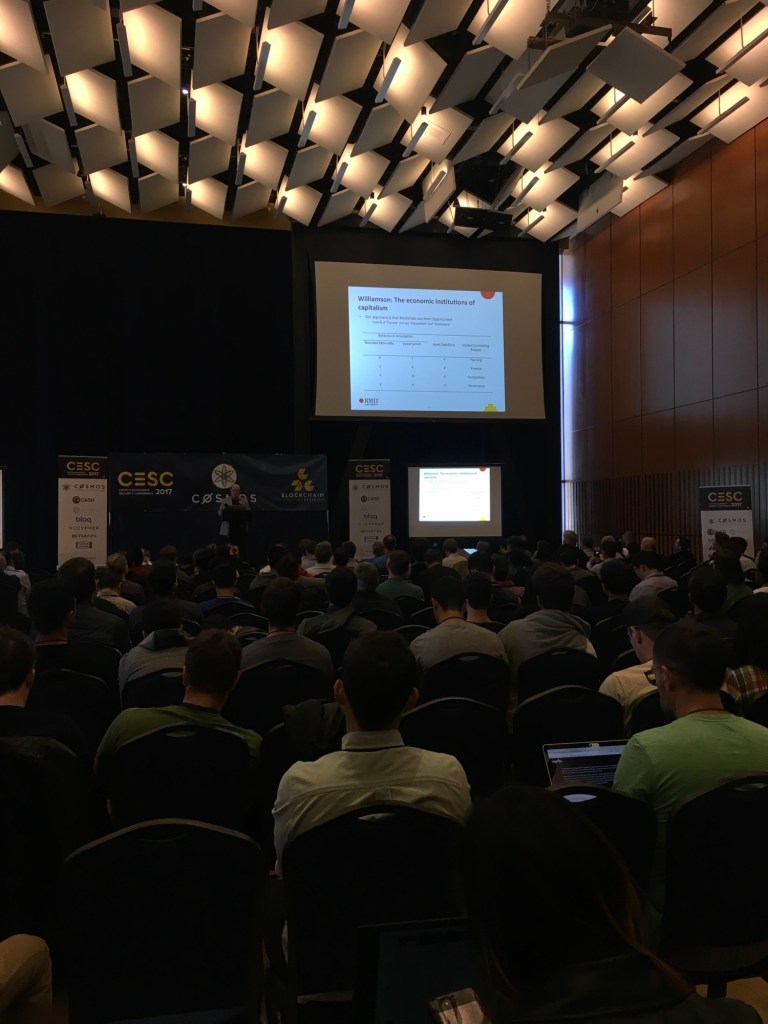
They’re in a big room and it’s dark.

 Visibility shift - giselle bisson
Leave a comment